
Denis Akemnkeng says…

THE NEGOTIATIONS HELD BY AYUK TABE & CO WITH LRC ON 2 JULY 2020
By Denis Atemnkeng
If LRC is willing to start talking, then it is a welcome development.

But knowing LRC only too well, it is important for Ambazonia not to rush to any conclusions, but to find out what exactly LRC wants to talk about.

It is reported that the subject of the discussion was about a ceasefire, although there was mention of more talks in a neutral country without further details.

If LRC wants to talk not just about a ceasefire but the whole war, then this is a development that Ambazonia should formally welcome as a positive step in the right direction, and remind LRC that war was never necessary in the first place and that the only solution is to meet on the negotiation table.

Those LRC has picked and chosen to talk to know two things: (1) if the talks are about a ceasefire, they of course know that only those who control the fire on the ground can talk about causing it to cease. Ceasefires are not negotiated by those who have no army and no boots on the ground! (2) If the talks are much more than just on a ceasefire, they also know that they cannot represent the 8 million Ambazonians and that no one has chosen them to represent Ambazonia. They have been chosen solely by the enemy and they must humble themselves to admit that that does not qualify them as Ambazonian delegates to any talks.

LRC cannot cross the boundary and pick and choose those to negotiate with on the Ambazonian side. All those posing as facilitators to any talks must know this.

Ambazonia must have the freedom to choose its own delegates to any genuine talks.

The psychology of those held in prison, under maximum detention conditions and possibly brainwashed and subjected to unknown pressures must always be taken into account in these matters. That those who are in prison are under enormous pressures and unknown influences, no one can doubt that. They are naturally soft targets for manipulation and control.

If LRC picks and chooses those to talk to, you can guess who it will choose and why it will do so. If you were the one picking, who will you pick? Will you pick those who are adamant about Ambazonia independence? Will you pick those you cannot manipulate and control? Will you pick those who will give you any headaches on the negotiation table?

And this may perhaps be confirmed by the very fact that Pa Ngala Nfor and Wilfred Tassang have never been among those being invited for discussions! And very, very strangely, those being invited have never insisted that they be part of the discussions! Well, we may not know all the details.

LRC is fully aware of who control soldiers on the ground in Ambazonia; they are fully aware of who gives orders for lockdowns; there is nothing to teach them about the state of affairs in Ambazonia. So why have they decided to pick and choose who to speak to? Is it just one more strategy to cause division among Ambazonians? Can they seriously talk about a ceasefire to those they know control no soldiers on the ground? Your guess is as good as my own.

Our Brothers in prison and those invited to the negotiations ought to know better than anyone else that their circumstances do not permit them to freely represent the eight million Ambazonians bearing the brunt of the war. Their current circumstances do not allow it!

Those being invited ought, out of this realization, to say to LRC: “We are not competent to negotiate on behalf of eight million Ambazonians. We have not been chosen by them to talk on their behalf. We control no troops on the ground. It is for Ambazonia to find its own formula on who will represent it in the talks.”

That they have not yet done so, is probably the psychological condition of incarceration that we have mentioned above. All of them ought to see right away that Ambazonia has not chosen them to speak on their behalf in any talks and especially that they don’t control any fire on GZ. And the God of Ambazonia forbid that they start committing themselves or Ambazonia on any count!

For every negotiation with LRC, the same rule must apply: that Ambazonia will find a formula for representation but not that any individual or individuals will arrogate the right to speak on behalf of the people without their authority to do so.

On the Ambazonian side, these talks are not an occasion for egos to flare up.

This is not an occasion to celebrate that one side has won over the other because a foreign enemy-country has decided to talk to one side and not the other; the enemy or any foreign country must never be the one to choose Ambazonian leaders for its people. We have all said it time and again: Ambazonia must speak for itself! No foreign country will decide the fate of Ambazonia any longer!

This is not an occasion either for self-positioning and jostling. Small egos are hard to control in these circumstances, but Ambazonians who can see beyond themselves should help put things right. We may rightly say that this is an occasion for reconciliation on the Ambazonian side.

This is an occasion to place Ambazonian sovereign independence first; this is an occasion for Ambazonian unity; this an occasion to find a formula for one Ambazonia voice; this is an occasion to avoid all antagonism and politicking; this is an occasion to say to your brother: “We all wanted these talks. Now they are here, what do we do?” Every leader worthy of the name must guard his tongue now and put his ego under control. Words cause war, and create all kinds of disharmony. At this point, we need harmony and mutual understanding for the benefit of Ambazonia, not any attempt by anyone to claim a victory that is not yet in sight.

We are obliged to talk to each other now for the best interest of Ambazonia. Remember what happened in 1961 between Endeley and Foncha? Do you want to sell Ambazonia a second time because of personality clashes? Do you want to miss this opportunity again because of our internal divisions? NO. We do not want to prolong the enslavement and suffering of Ambazonia and its people.

Ambazonians have said it over and over again: they do not care who takes them to Buea. They want to reach Buea. Every Ambazonian in their little corner is doing whatever they can to see freedom. Politicians should not delay their arrival in Buea because they are fighting to claim that they and they alone took Ambazonia to Buea. No. We Ambazonians reject that kind of politics.

Again, the leaders must be reminded: when we reach Buea, the people will choose their leaders by democratic processes. No one should be under the illusion that they will be the ones to be in power when we get to Buea or that they will start another war to get to power.

Sensible leadership calls for Ambazonia to officially welcome the talks, in no abusive or sarcastic terms, but genuinely; to tell LRC that fighting was never welcomed and it could never be the solution. The leadership should tell LRC that history teaches us that only injustice causes war and that once justice and restitution are done, LRC and Ambazonia will be the best of neighbours. Justice and restitution are the only way to have peace between the two neighbours.

We should not indulge in any daydreaming that LRC has finally accepted that this is not an internal matter. By repeatedly asserting that this is an internal matter, LRC thereby denies flat that there was ever any union! A conflict between two parties to a purported union cannot be the internal affair of one of them. But so claims LRC! So we must be on our guard, all the time! Our soldiers must be in heightened alert, even while the talks are going on. It is only on the negotiation table that we will finally know what LRC wants to talk about!

Whether these current talks continue or not, Ambazonia should now work out the formula for representation in any future talks and have it ready. Whichever talks are going to hold and where, Ambazonia should seriously think of the formula for one Ambazonia voice.

Even those who have opposed certain talks and said all kinds of things will want to be part of those talks if after all they happen. Always remember that the fate of Ambazonia concerns all of us, ALL, even those who are willing to kill their fellow Ambazonians because of common disagreements. Let the victory be our common victory, not that of Mr. Y because Mr. X was against the talks. This is NOT the moment to appear in dispersed ranks but to be one solid bloc.

Has the Ambazonian formula for representation towards any future talks been worked out? Let us not be caught unawares. We should do that now! All stakeholders should be included, and let them be the ones to decline to be in the team. When that formula is found, we must have our own discussions before meeting the other side. Make no mistake: this can only be a coalition of the willing.

This is the moment when genuine leaders will distinguish themselves by how clearly they put Ambazonia first; how they bring their egos under control and rally all stakeholders around our common destiny, despite everything that has been said and done in the past.

Forward Ambazonia, backward never.
Long live Ambazonia, short live the struggle.
Pa Tassang says…

Negotiating from Prison: not Another Foumban, not Another Nera *Deacon TASSANG Wilfred* Prison Principale Kondengui

Yaoundé, 04/07/2020

It might seem I write a little too much, but I’d rather write even more than to wait and answer questions from my people as to why I did not communicate when I could. The matter at hand is of paramount importance and nobody who has an opinion should stay mute. “If I had known” will not be excuse enough after things have gone awry.

The outing by my brothers on Thursday, July 02 2020 was not the first, but the second, and for the second time, I refused to go. Is it because I am a sadist, comfortable with prison? No. Is it because I don’t want to facilitate the resolution of the crisis in homeland? No. The solution to the enslavement of our people is why I am in prison and nothing which can be done to solve this problem should be undermined. Negotiating in chains however, is not even an option to be considered, and I have refused to be party to any such acts of deliberate and willful buffoonery. I am sorry for sounding this way, but those who are doing this can in no way be compared to Foncha; these are PhDs, lawyers etc. Is it possible that these brothers don’t know what they are doing? Not with all their learning and all the quotations that they themselves make references to often. For this reason, and because they have told me several times that Mandela negotiated from prison, I want to quote that Mandela on this subject matter, and he said; “Prisoners don’t negotiate….”

On the 16/04/2020, at about dinner time, 5pm, a fellow inmate walked up to me with a piece of paper in hand and said three of my Nera brothers and I were summoned to appear before the Military Prosecutor”. My answer without a second thought was that I was unwell and will not leave the prison. When these people come for us, it is a squad of the dreaded BIR that comes. When I refused, I knew that I could be forced out even by my straps, at gun point. True, I was unwell, but if I were not, would I have gone? This question, my brother, Julius, asked me a few weeks after their outing. My answer to him was a firm “no. I won’t have.” Why?

You all remember how many times you have wanted to know from me if we were discussing with the authorities in Yaoundé and how many times I had replied in the negative. However, I had been expecting that they would come to talk with us since in SED, (especially after it became clear that our abduction achieved the exact opposite of what Yaoundé expected; general escalation) but they didn’t come until now. It is because I was expecting them that I had also taken a stance on what to do when they came. I am perhaps a foolish man, but that is my position. It was, according to me, SCACUF, the Consortium, bad for Balla and Fontem to negotiate from prison; will it now be good for me to go against the grain of my own virtues? If indeed I did wrong in opposing Balla et al from negotiating from prison, I would change. But it was not wrong. It will never be a good thing for captives to negotiate their freedom or freedom for free people, no matter how brave they are. And do I look like a weakling?

A few weeks after that April meeting, I was summoned again to the office of the Superintendent in charge. It is not unusual here, and as an inmate, you answer running. When I reached there, I was ushered to the assistant’s office where some of my brothers were already seated, those who went for the meeting of the 16th. With them was a young man whose names I will withhold. The meeting was about following up on the discussions of the April 16 meeting. Out of decency, I held my peace until the meeting ended. The next day though, in a tripartite meeting with Pa Nfor and AyukTabe, I warned my brother never to ambush me again. If he wanted me to attend any such meetings, then I must be informed a day prior. I let him know, Pa Nfor witnessing, (Pa can deny this if he wishes) that he should not consider my sitting through that charade as endorsement of whatever he was doing.

On Wednesday, July 01, 2020, I received another summons from the Superintendent in charge, and I quickly dashed out. Guess who I met standing outside; this same young man mentioned above. I instantly worked myself into a rage, but by God’s grace, I was able to observe restrain and listen to him. He started talking right out there on the verandah before the Superintendent came to usher us into his office. The young man who calls me Pa and AyukTabe, Uncle, told me he was sent by Tibor Nagy, and that he, Tibor Nagy, was asking that we negotiate with Yaoundé. Thank God for grace. I told him Secretary Nagy should say that to the IG out there, and this fellow despitefully asked me “which IG?” I almost flipped. The young man persisted and even “threatened” to give me his Nagy’s contact. Imagine that! I was telling him I won’t be part of any charade when my brothers, Eyambe and AyukTabe walked in. I restated it very firmly, letting it be known that I am not part of this drama and that I did not in anyway encourage it. I stormed out fuming and almost collided with the Superintendent who was stepping in. I told him I was done and rushed away.

I am conscious of my humanity (possibility of weakness) and will not allow this to influence what I do from this prison. My body aches from the discomfort of my prison duplexed bunk. I yearn to see my family too, even if homeland is not yet restored. I left my little daughter who would not eat if daddy were not by her. She wants to eat daddy’s stew again. More than anyone else, I want to see this war come to an end. I want to be free to talk to my people without inhibitions. Oh how I want to come out of here! Even with all these yearnings, I can’t afford to “make erreur”, especially as it became clear in that first meeting with the young man, that his main concern was getting his Uncle freed. He wept when stating this; “Uncle what are you doing here?” Well, don’t we all want our freedom? I will be first to step out of these walls when the gates fall apart, make no error about that, and this, I have told my brother, Julius.

Today, one of the lawyers I hitherto admired, (Barr. Ayuketang) on account of his rugged courage and tenacity, wrote an endorsement of AyukTabe’s outings in chains, and I quote Art.6 of his release; he holds that the invitation of AyukTabe by Yaoundé means “That Sisiku AyukTabe is recognised as the legitimate leader and face of the Ambazonian struggle for independence.” Nothing can be more preposterous, and disgraceful to the black robe and white wig. It is basic knowledge that whoever the enemy has preference for in matters like this should be considered the “weak link” and should be kept aside going forward. That Yaoundé runs away from those who give orders on the ground to talk to harmless, but desperate people in chains should tell even AyukTabe that he has been identified as the weak link. What does one do in search a situation? In civilised cultures, anybody in AyukTabe’s position will back off. Worse, can you imagine that the British Premier will linger for a day at 10 Downing if he had his cabinet kidnapped by the enemy even if he were not guilty of negligence? How do we acquire these huge certificates and not acquire culture and good manners? How do we lay claim to so much knowledge and yet not know that we are all so limited? Is not humility a hallmark of a genuine intellectual? Or, is there a noose hanging over somebody’s head?

Now, for more clarity, I want us to consider the list of those who were chosen by the enemy to attend the meetings, especially that of Wednesday the 2nd; Mancho Bibixy, Penn Terrence, Rev. Fritz Takang aka Bush Hunter, Ngome, all from Central Prison. Are not these gentlemen, particularly Mancho, and Rev. Takang, certified for having turned their backs on the struggle for homeland restoration? Haven’t they written letters of apology to the La Republique government, begging to be given back their liberty? Is this not a clear sign that Yaoundé is treating this matter as their internal affair? Another national dialogue? The Adhoc Committee negotiations with teachers was even better because we, the union leaders, determined those who came to sit with us to face the government. Is it really true that the belligerent country can determine those it negotiates with from the country it is at war with? No. Except of course that they are in chains and or, are spoilers, or worse still, that, as is the case, Yaoundé wants to use the said willing collaborators to create confusion and stall progress on negotiations.

Let us for one moment imagine that we were superhumans, and that by some magic, the people trusted us, prisoners; and that all the things that happened did not happen; let us assume for a moment that AyukTabe did not press his “reset button,” and that there were no clouds hanging over the Nera Hotel kidnappings, and that we are in perfect unity. If AyukTabe were truly the President, and had to go for negotiations or pre-whatever in Yaoundé, would he not choose those to go with him? How does it even happen that the president will go for any such thing? Will he not commission a team that will come back to report to him? In the circumstances, (and even if I now am truly worried about Chairman Nfor) is there a possibility that any such delegation will not have Pa Nfor amongst? “More importantly, in this delicate matter bothering on the (International) Law, seeing that these are inmates, shouldn’t AyukTabe have insisted on taking his counsel or counsels along, the same to speak for him before and after the event?
Let me state here categorically, and if Pa wants, let him disown me again, that he, Pa Nfor was kept totally in the dark. When AyukTabe called me and Pa Nfor weeks after the April 16 nocturnal outing, he, AyukTabe stated that the report he was giving then had not been given even to Pa Nfor. Was he therefore doing me a great favour, or was he despising the old man publicly? When they went out on the evening of July 02, Pa Nfor came to have a word with me and I asked to know if he was aware that a delegation had left the prison for “negotiations”? As true as it was raining at that hour, Pa said he was not aware. AyukTabe did not even tell him that his nephew came the previous day with a message from a certain Tibor Nagy. So who does AyukTabe talk to? Who does he consult? Who does he give account to? Are you overwhelmed? I am much more so. And how come that we are seeing only the names of prisoner negotiators? Why is the list of the government party kept a secret? Who does it benefit that the government party is kept top secret? Is it because, as French media are relaying, a certain Prof. Maurice Kamto, the legal wizard from La Republique, was sitting in with his brothers, those who are committing genocide in Ambazonia? Or is it because the other party was made up of soldiers? Is La Republique now run by a military junta? Why is no one saying publicly that an agreement was reached for La Republique to pull away its troops to barracks only, contrary to what the struggle has asked as confidence building measures viz that the occupying country should simply pull away its troops from the territory? So the #Ngarbuh and #Nyen garrisons will still be there? Is this not giving in too much. How could it be otherwise when prisoners are dragged to talks? As a syndicate leader, I can tell you that whenever the term “negotiations” is mentioned, what comes to mind first is “giving and taking.” Therefore, one must not walk into any negotiations from a position of weakness. Did my brothers sit at the table from a position of strength? Answer? No. The aggrieved party must raise the stakes extremely very high at the beginning of all discussions. Was this so on the 2nd? Answer? No. At the very first request for concession, the prisoners gave in. Isn’t that normal under the circumstances?

When I look back, and when I consider my generation, I come to the conclusion that we have no reason whatsoever to judge Foncha and Muna; these were over-anxious, humble primary school teachers, probably overwhelmed by recent electoral victory over Endeley. History has it that prior to Foumban, Dr. Endeley did request that they sit down and prepare for the negotiations and to go together, but nay, Foncha will have none of this. He had won elections and by this, was “qualified” to represent the Southern Cameroons. Right? Did winning elections confer on Foncha the required wisdom and skills needed to negotiate with La Republique and France? Certainly not. All it gave him was the mandate to organise and coordinate. I remember in the DIA in Nigeria, President AyukTabe prided himself of his new status; he too had been arrested and detained, he said. What would Akwanga now say? He asked. So, and probably, this imprisonment thing is a new feather, a badge of honour as it were, and better qualifies him to lead. If imprisonment as a sacrifice, qualifies one to negotiate, shall we not also think that those who have paid the supreme sacrifice of death should be exhumed and brought to negotiate on account of the price they have paid and the highest expertise acquired by dying for the cause? Or is it that abduction at Nera Hotel qualifies one as an expert negotiator much more? As for me, I don’t need Mandela to tell me that “Prisoners don’t negotiate”, and that only free men should, for I know indeed that, only free men, suffering no inhibitions, should negotiate for freedom.

While it is true that pressure is really high on Yaoundé to report to the table of dialogue, I think that Yaoundé is not yet fully repentant. Are not their atrocities on the increase? Their present nightmare is the ongoing War Draft. In initiating this charade, Yaoundé certainly thinks that it will dampen the zeal to draft seeing that the matter is being “handled already.” Shame on childish pranks!

In 2020, we cannot afford to accommodate another Foncha even if they come with a thousand PhDs and glide in the most colourful “professoral” robes. Anxiety or treachery veiled in smart uncoached declarations cannot be tolerated anymore. Those Ambazonia is called to deal with today are nolonger “our brothers;” they are “our enemies.” Another Foncha shall not rise. Another Foumban shall not take place. The yet to start negotiations shall not be abducted.

It is no secret that when Yaoundé got us kidnapped, the ransom they wanted or want in exchange for our freedom is the homeland. It is no secret that when its court sentenced us without trial to life jail, the intention was to cause us to become weak and desperate, so that we may danse Bikutsi from their xylophones even when this is played on the wrong key. I will not danse this dance. I refuse to be weak; I refuse to be desperate. My children are better off without a father than have a name that haunts them for generations. I will not be anathema and my generations will not be.

This struggle shall not last.

God bless Ambazonia.

A quote from a man ahead of his time…

Cameroon, by virtue of any political theory,

cannot be described as a nation but
complex juxtaposition of aggregated
geographical features plus two different
colonial linguistic heritages all of which
were involuntarily patched up together
through the colonial experience, It is over
fifty years old and for its fifty years of mere
existence,
geographical features which is said to be
African in miniature has had its moments of
as a
this complex diversity of
incidental glory;

from 1960 to 1985 in which there was real
achievement in the domains of infrastructure and rural
development, and real misery thereafter wherein no
achievement was recorded in any domain.

“Whatever the case,
whether one is referring to the period of glory or that of gloom,
the one thing that stands out significantly clear is that the
hegemonic state has been the sole dominant actor having rather
confiscated the people’s historicity thus holding dominance
over helpless citizens whose duty has been only to legitimise the
maintenance of local hegemony by voting masquerades into
office with no say in matters of governance or with no power to
determine the type of governmental structure they will like to put
in place to effectively govern them. This book, however, is not an
analysis of Cameroon’s political life for those its fifty years of
mere existence. It rather takes the reader upstream to the
genesis of Cameroon’s constitution and demonstrates how it
has been used over the years as a political requisite to ensure the
success of the global hegemonic ambition which subjugates
helpless citizens within a hegemonic state structure that was
created to be an appendage of the metropolitan economy under
an aristocratic regime that was imposed on the people by
Western powers based on the corruption of reality thus serving
as a local hegemony which facilitates the exercise of global
hegemony. In other words, this book illustrates how local
hegemonies are made and maintained to ensure the success of
global hegemony. It is a major contribution to the understanding
of hegemony.

From the book ” Aconstitutional hold-up in Cameroon” (c) Nfamwih Aseh 2011. The visionary author sadly passed away this day 14/5/2020; RIP

Chaos in LRC – Mr Ngute’s plight

As if proof were needed, Atanga Nji was quick to verify that Mr Ngute’s jaunt to West Cameroon was a fool’s errand.
Even before Mr Ngute had finished self-congratulating on his safe return from the dubious trip, Mr Nji was on hand to declare his [Mr Ngute’s] promises untenable. “We will not discuss the form of the state”.
What will happen now? Nothing at all! The government of Cameroun works, that is functions, using the term in the loosest sense, on “high instructions”. This means that the PM, who has been demonstrated to have no powers, is no better than any other minister acting on high instructions! This fact is not a plot to limit the powers of an anglophone PM! Even a francophone PM would still, in practice, endure the same humiliation of seeing his word rubbished by a supposed subordinate minister in “his government”.
This is because of the centralized presidential system in place. The system limits the powers of any PM to the ceremonial chairing of non-binding ministerial meetings and has simply had the function of having an anglophone “head of government” so that nobody could cry marginalization.
Because of that system, Mr Nji was complete accurate in his evaluation. There is no leadership in LRC in practice as no minister, not even the PM, can prove that they have “high instructions” to make any commitments such as Mr Ngute did in West Cameroon. Mr Biya is not well enough to get involved. Yes that is a strange phrase and is the only possible explanation. Mr Ngute was merely sent out to play for time while logic dictates that MR Biya is still expecting to suppress the uprising by force.
With this level of chaos in LRC, Ambazonia would be “walking” it if their leadership was more credible.
The proper committed figures such as ***** and others should step up and contribute. They should be willing to give of their leadership and guidance to galvanize the groundswell of commitment that clearly awaits direction while the previous leaders are in captivity.

LRC PM Dion Ngute completes empty promise tour
dn in swLRC PM Dion Ngute completes empty promise tour

Mr Ngute continued his empty promises in the South West always seeming to invoke the incantation “The President of the Republic…” in every speech he uttered.

Experience, though, teaches that promises of LRC Prime Ministers or other politicians are rarely to be taken seriously as they are understood not to commit their government in anyway.

Additionally to this conventional wisdom, Mr Ngute’s statements to “former Amba Boys” betrayed a certain simplicity which only reinforced this urge to ignore his utterances during this jamboree in the North West and later on the South West. For instance he called on the Amba Boys to accept their “mistake” in taking up arms and seek forgiveness from Mr Biya as he visited purported former Amba Boys in Bamenda. In the South West he judged it appropriate to condescend that Mr Biya, “their father”, would forgive the Amba Boys and that dialogue would be no-holds-barred – apart from secession. As he offered these balms, “his” governments military continued to kill and burn homes in the North West and South West, with the North West governor offering compensation for burnt homes, at one point.

While his condition on secession was not surprising from a LRC prime minister, given previous experience, it is “his” territorial administration minister’s  follow-up statement that raised eye-brows. The latter declared that the dialogue would not be unconditional, but rather that the form of the state would not be under consideration.  This would tally with the theory of  a “mistake” by the Amba Boys in taking arms to fight for change – but only very tenuously.

Mr Nji’s statement reflects Mr Biya’s position even before he declared war and ordered the ongoing killings on the South West and North West villagers, and therefore, as it means no dialogue a more consistent LRC government position.

This shower of cold water for Mr Ngute is not new for LRC’s long list of Anglophone Prime Minsters who never managed, non of them, to hide their subordination to other ministers in “their” governments. The only shock this time is that even for Mr Atanga Nji, it is also the first time that one of those superior-to-the PM minsters is also an Anglophone.

The irony of Mr Ngute’s tour is that the local populace would seem to be more forth-coming in suggesting routes out of the impasse. He is, for instance, reported to have been told in an open audience that the anglophone prisoners needed to be released before any dialogue could be meaningful. The non-surprise is that his reply was that he would submit his findings to Mr Biya “for consideration”.

His report is likely to find itself in the same bin as the reports from previous tours – Musonge, Yang, Ghoghomo…

The tour was not needed for what it is going to achieve.


Mr. Dion Ngute, “PM” of LRC in Bamenda: Fool’s Errand?

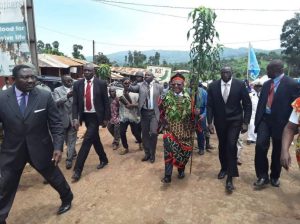
Mr Dion Ngute, PM of, LRC, La Republique du Cameroun has been in Bamenda, Suuthern Cameroons for the last three days. In that time he has posed with a peace plant and an ill-fitting local attire clumsily intended to fit in. The outfits and peace plant were not the only incongruities.

Claims to be in dialogue

Mr Ngute tweeted a self-congratulatory message that he had come to continue “on-going” dialogue condescended by the benevolent dictator of LRC. His method was exactly the same as that of his predecessor in the appointed patronage post. He would ignore all the grievances and claim dialogue while meeting the local “elites”. Worthy of note is that the term “elites” refers to collaborators who benefit from the status quo by accepting the largesse of the afore-mentioned dictator in exchange for occasionally posing as pleased populace. In the last three years the “elites” have had to work over-time to continue to support the dictator while their supposed constituents were being murdered and burnt out of home. Mr Ngute claimed the only condition on the claimed dialogue was that the Restoration of Southern Cameroon independence, as demanded by resistance of the Amba Boys, would remain off the table.

Killings Continued during the Visits

There were reports of burning villages near Ndu while Mr Ngute made his claims and photo calls. It was not a surprise as he is following the same methods. LRC sends elites to pose for pictures with paid local civil servants and RDPC beneficiaries while trying to enforce “unity” through force of murder and extreme brutality. Mr Ngute’s tweet carried images of a crowd wearing pro-Biya tee shirts!

Also, in a City under curfew, the “local” women managed to deploy to the vicinity of his hotel with professionally printed placards demanding peace. This is in a city under curfew in a country where all marches have to be “authorised” formally by letters from the “chefs de terre”.

Author of the Suffering Offers Peace

If the foregoing was not odd enough the offer of peace is being dangled by the same dictator who declared war nearly two-years ago and ordered home-burnings and murders of elderly villages. It is unclear how such an offer of peace could be interpreted while his troops are still busy killing and maiming under his orders. Five months ago Mr Biya reiterated his order boasting in a reference to the killings, of “ordering the neutralisation” of the Amba Boys if they did not drop their weapons. Mr Biya is clearly the author and has confessed responsibility for the suffering of the villagers of Southern Cameroons and has “sent” his appointee elite to pose as messenger of peace even while the murders and intimidation continue!

Mr Biya’s Last Rubber Stamp Did not Include Southern Cameroons

Mr Biya, “stood” for re-election under a flawed electoral system which lead to the declared results being disputed by his opponents in LRC. It is worth noting that it is widely accepted that the vote did not take place in Southern Cameroons so Mr Biya is not in a position to pose as the president of those two regions. In any case being a disputed president even in LRC, he is not in a position to guarantee any agreements reached in dialogue, were it properly constituted.

Mr Ngute is proposing to go to the South West Region, the other Southern Cameroons region to bring them the same gifts. The jury is still out as to what the non-elite Southern Cameroonians will make of the peace mission.

Image from web-sources…

WHAT’S MIMI MEFO’S FATE?

By Ayah Paul Abine

Is Mimi Mefo on bail? Is the case against her on course (to continue)?

Those have been interesting issues that have been raised since her release yesterday? Some CPDM lawyer and lay bigots were quick to describe her release as a presidential act of magnanimity; and they were assertive that the proceeding against her shall continue to the end. A good many interested as disinterested members of the public sought to know whether bail can be granted on a Saturday…

One should begin by congratulating Mimi’s defence team – Tamfu Esq, Madam Alice Nkom etc – for their commitment and legal prowess. At the end, however, the legal team was uncertain about the nature of their client’s release and whether criminal proceedings had been discontinued.

On my part, my little reading of the law and practice do not conjure up any express legal provision that bail can be granted on a Saturday. But by reasoning a contrario, it CANNOT, by necessary implications. Firstly, the business of the court is limited to working days. Saturday not being a working day, bail cannot legally and regularly be granted on such a day.

Again, by providing that no suspect should be taken into custody on a Saturday, the Criminal Procedure Code is telling, in effect, that, as bail is not possible on that day, custody, its antonym, shouldn’t be either. The symbol of justice being a balance, there cannot be one scale without the other. And the code is explicit that nonobservance of such of its provisions renders the process null and void.

Also does the law grant in the alternative the prerogatives of granting bail and that of remanding into custody: it is either the one or the other. I cannot bring my mind to any law that permits a judge to remand into custody in the morning and grant bail in the evening of his own volition in respect of the same party. If bail is denied by the lower court (including the State Counsel’s Chambers), for instance, the party applies for bail to the High Court. The lower court has no legal power to go forward and backwards: rule and overrule its own ruling.

And where a party is represented by a lawyer, every aspect of the proceeding must be done in the presence of the lawyer. If otherwise, the process is null and void as it is interpreted that the party has not been heard.

What, then, is the nature of Mimi Mefo’s release ? We have already indicated that even her lawyers don’t appear to be in the know. What I know, though, is that, at that level of the process, any release outside of bail can only be by a nolle prosequi. The only person competent to file a nolle is the Procureur General having territorial jurisdiction; or the ‘commissaire du Gouvernement’. A nolle must, however, be in writing and argued by the parties. The person filing the nolle must first be authorise in writing by the competent minister (Justice or Defence). I repeat ‘competent minister’!

For all that has been my lot to read, the President of the Republic has no power to issue a nolle (by decree); or order the release of the suspect/defendant/accused. It is possible he has some such similar power in respect of political ‘prisoners’; but NOT in the judiciary! The action by the President of the Republic in this case, (though hailed by his party’s bigots and lawyers), is not covered by any law; and it can only lead to the conclusion that Mimi was held as a political prisoner.

Be the case as it may, what is the fate of her case ? If it was a release consequent upon a nolle, the action is automatically and immediately discontinued, without the court reserving the right to ask any question. That does not, however, bar subsequent proceeding on the same facts. But as already pointed out, it was not a nolle.

As it was not bail either, it is quite difficult to be very assertive at law. What is clear though is that Mimi was not properly before the ‘Commissaire du Gouvernement’ at the very beginning for want of jurisdiction. All that the military officer did was consequently null and void. Subsequently getting her out of the mess by the act of the very officer is of no legal consequence: it was a remorseful act of repentance in mitigation of potential legal proceeding on false imprisonment against the officer in question. It does not have the effect of legalizing the illegality committed ab initio.

If Mimi is to appear before the ’Commissaire du Gouvernement’ for some other offence within his jurisdiction, she has to be served afresh in compliance with the relevant provisions of the Criminal Procedure Code. In short, nothing binds Mimi to appear before the officer tomorrow or before any court whatsoever in respect of the previous proceedings which are, for all intents and purposes, null and void!

All that has been said above is mere intellectual exercise since the military spokesman has declared that Mimi was released on the order of the President of the Republic; and that the said president has ordered the discontinuance of the proceeding. It does not fall to me to query whether the military spokesman also speaks for the military court. One may only rightly wonder, however, whether the President of the Republic as the Supreme Commander is a member of the military court; or whether he constitutes a higher military court with the power to overrule the lower military court. If otherwise, on what law was the President’s order(s) based?

The question appears to have no merits fundamentally. As Mimi was not properly before any competent court, and was therefore only under false imprisonment, whether the President’s act is legal or otherwise has no bearing against her ‘release’. In fact, she has only been liberated from captivity. Nor can there be any illegality in resorting to illegality to put an end to illegality!

All in all, Mr. President’s action is only consistent with the absence of the separation of powers in Camerouoon; and with the fact that all the three powers are concentrated in the hands of an individual. It is suggestive that the law has no binding effect in the country; and that justice NEVER can be done to an ordinary citizen who does not have the necessary popularity, or is not in a position to command the hue and cry from the members of the public (the masses)!

Anyway, for Mimi, all is well that ends well!

THE PRESENT CASE IS OVER!

GLORY TO GOD ON HIGH!”

Anglophone General Conference To What Ends?

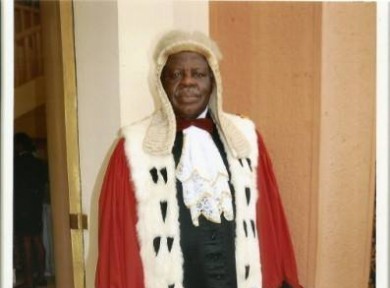
Justice Ayah Paul comments:

” A few weeks to the kick start of the All Anglophone Conference which has been described by some anglophones as a window dressing for the ongoing anglophone crisis in the North West and South West Region of Cameroon, revered form Cameroon Supreme court Justice Ayah Paul has questioned the objectivity of the conference amidst massive human rights abuses.
Speaking to the organizers, Justice Ayah writes on his Facebook wall
“To recur to the prelude of yesterday to this write-up, the appellation of what Cardinal Christian Tumi and others are organising is of little consequence. To paraphrase William Shakespeare, what is in a name? The crucial issues are the conduct of the forum and the implementation of the resolutions.

Before we attempt to tackle the points, a terse summary of the journey to the present devastating hostilities may add up to the better understanding of our queries and/or apprehension. After the fatal launch of the SDF political party in Bamenda on May 26, 1990, and the ensuing government crackdown, leading to the detention and torture of prominent anglophones, including such moderate elders like Learned Justice Nyor Wakai, All Anglophones Conferences held at Buea and Bamenda and presented memoranda to Mr. President of the Republic, with a list of Anglophones’ grievances for redress. When Mr. President would not as much as vouchsafe Anglophones even a reply, Southern Cameroons National Council (SCNC) was set up to pursue the issues with the government. The SCNC adopted as a motto : ‘The force of argument and not the argument of force’ – which is to say, their modus operandi was nonviolent!
Curiously, and in the like manner following the launch of SDF, Mr. President replied with gruesome crackdown. Some of the victims successfully sued the government at the African Commission of Human and People’s rights where it was held, inter alia, that Anglophones were a PEOPLE. Probably inspired by the appellation South West African People’s Organisation (SWAPO), the victims in question christened their group Southern Cameroons People’s Organisation (SCAPO), almost in rivalry to the SCNC.
While Mr. President availed himself of an international judgment relative to the Bakassi Peninsular, the very person ignored and has ignored the international judgment in favour of SCNC (SCAPO) till date. SCNC continued on the peaceful path in the search for justice. But once every year, Anglophones wanting to celebrate their independence day on October 1 were systematically brutalized, arrested, detained, torture and, at times, taken to court…Even then, they stayed steadfast in their doctrine of ‘The force of argument and not the argument of force‘.
The situation took a turning for the worse when the head of SCNC, Chief Ayamba, died. It was no longer just a matter of contending with the rivalry between SCNC and SCAPO. The SCNC itself got split into some five factions. Disillusioned with the split and intestinal fratricidal squabbles, Ayah Paul Abine declined to take the hot chair, even as a faction purported to have elected him the SCNC leader at Kumba. In the absence of clear leadership, some Anglophones in the diaspora, consciously or unconsciously, stepped in to fill the gap – after all, nature does not allow a vacuum! When, in their systematic and characteristic crackdown Mr. President’s men brutalized Anglophone lawyers and the students of the University of Buea who were peacefully demanding the preservation of some Common Law values and fair scholarship conditions, the anglophone diaspora seized the opportunity to take over the Anglophone leadership…
As it stands, Anglophones, also known today as Ambazonians, constitute two complementary groups, indispensably interdependent – the one cannot do without the other. Record would show that Ayah Paul Abine has been consistent that a third All anglophone Conference (AAC3) was a condition sin qua non for any resolution of the Anglophone Crisis which has escalated into the declared Anglophone War. It seems most likely that the crucible of a lasting solution to the present situation is when Anglophones meet and freely resolve on the way forward : on what do the majority of the Anglophone want relative to the their socio-political/cultural destiny! Anything short of such vital come-together and democratic determination of their fate would be merely a test of the grounds.
We see, for instance, that upon the announcement of the Tumi initiative, our people in the diaspora met in Washington without the home front and took resolutions, including the listing of the persons that would represent us at any possible negotiations. Months since and the impact on the ground is not felt. Similarly, AGC without the diaspora shall produce little effective results. That seems to lend support to the argument that the appropriate solution lies in the two meeting and freely charting the way forward.
Another factor we may not neglect is that we have met internally twice before with little concrete results. Much as the home front is bearing the brunt of the current ruthless brutalities of the army; and the home front is the shield against those brutalities, the outer front is on the diplomatic offensive. And several times has the government averred that funding is from them. If so it is, the home front alone can never single-handedly influence the cessation of hostilities and any eventual negotiations.
How then can one appreciate the Tumi initiative? The African proverb is that you don’t stop the lullaby as long as the child cries on. In other words, we cannot stand idly by ‘while the souls of men are dying’. Yet should we not lose sight of antecedents, and the fact that Mr. President has treated with contempt all appeals for a peaceful resolution. Can it be conjectured that, with the wanton destruction of over 500 human lives, and the continuous losses on both sides, Mr. President may now capitalize on an internal face-saving endeavour to turn more to reason than to sentiments? Were that even to be the case, associating the diaspora would be of vital necessity. They have played no negligible role in bringing about any such turnabout; and their place at the final entente is, of necessity, indispensable.
All this brings us to the one all-important conclusion that the better approach would have been to prevail on Mr. President to take the necessary measures to guarantee the participation of Anglophones in the diaspora without incurring any official adverse reaction. And preceding the conference with the release of those in prison and detention would have been absolutely conducive to healthy discussions with fraternal disposition. Without attempting to wonder, without offending against decorum, whether the outcome of the upcoming Tumi initiative may not find comfort in the waste basket like previous initiatives, we still propose to try and see.
But in the meantime, we are losing men/women/children and property daily. In whose interest is it to beat about the bush instead of hitting the nail directly on the head? If I had the answer, would I still put the question to you, brethren?
PAPA GOD.
YOU SEE AND KNOW EVERYTHING!” Ayah Concluded “

The All-Anglophone General Conference 2018 – Why?

The 2018 incarnation of the All-Anglopone General Conference in Southern Cameroons is slated to take place in November 2018. Spearheaded by Cardinal Tumi and other religious leaders, it is meant to contribute to the solution of “The Anglophone Crisis”.

The organizers have stated they re seeking ideas from participants on how to improve the lot of the Anglophone in the country now called La Republic du Cameroun – The Republic of Cameroon.

The lot of the Anglophone is dominated by what has been termed the “Anglophone Crisis”. This phrase refers to the adverse experience, namely belittling, ridiculing discriminating, violence and other treatments meted on Anglophones in the Republic. These experiences are widespread and long standing, having persisted almost since “independence” and been reinforced by policy and practice changes.

On the first of October 1961 when Southern Cameroons officially formed a Federal Republic with the already independent La Republic du Cameroon, it was “agreed” that the federation would maintain two systems of government as it was acknowledged that there would be difficulties integrating the two different systems. For one thing the language was highlighted as an issue. In the run up, it was pointed out in the British parliament that the Southern Cameroons were being left to their own devices with the police force and civil servants allowed to withdraw even though there were no ready replacements to run the system. The attitude of Her Majesty’s Government was that “Mr Ahidjo might notice ideas suggested” and act to mitigate them. HMG did not think the tripartite talks between LRC, Southern Cameroons and the UK merited the attention of a minister and left it to civil servants to attend. [Hansard].

By 1972, the Federal Republic had become a centralized “United Republic of Cameroon” and then “The Republic of Cameroon” – the name of the then East Cameroon at the time of the Federation.  Since then a sequence of changes has been put in place to suppress the heritage of the Southern Cameroons state.  These legal changes and physical nudges all created  a hostile system and experience which the anglophone community came to describe as marginalization. It is also this that the current LRC, first dismissed and then described as “The anglophone Crisis”.

Within the Anglophone community, there are those who think that returning to a federal system would solve the “Crisis”.  In recent times the anglophone experience has been extensively articulated ranging from those who think that Decentralization suffices through federalists to separatists.  It is these three strands that would be expected to distill a position in the conference.  A few questions remain. Since the government of LRC has stuck to a position “against a change to the form of the state” what do the organizers expect to gain even if the manage to agree? How will they cater for separatists? Will the latter be able to attend a conference under LRC control when LRC is still actively prosecuting a war against them? If they cannot attend, what will the resolutions be worth?

The bigger question is the role of the French and the Francophone system which has recently proved unsatisfactory when it comes to organizing elections. Is it not the Francophones who should hold a General Conference. If the francophone political elite were happy to participate under the system what do they really think?