The video of the debate is on the house archive.
https://parliamentlive.tv/event/index/4a0679bf-6e75-4a34-8701-792bdaa3374b?in=20:03:38&out=21:14:00
Dispassionate news and opinion, fairly presented.
The video of the debate is on the house archive.
https://parliamentlive.tv/event/index/4a0679bf-6e75-4a34-8701-792bdaa3374b?in=20:03:38&out=21:14:00
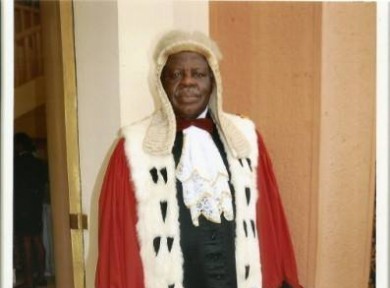
By Ayah Paul Abine
Is Mimi Mefo on bail? Is the case against her on course (to continue)?
Those have been interesting issues that have been raised since her release yesterday? Some CPDM lawyer and lay bigots were quick to describe her release as a presidential act of magnanimity; and they were assertive that the proceeding against her shall continue to the end. A good many interested as disinterested members of the public sought to know whether bail can be granted on a Saturday…
One should begin by congratulating Mimi’s defence team – Tamfu Esq, Madam Alice Nkom etc – for their commitment and legal prowess. At the end, however, the legal team was uncertain about the nature of their client’s release and whether criminal proceedings had been discontinued.
On my part, my little reading of the law and practice do not conjure up any express legal provision that bail can be granted on a Saturday. But by reasoning a contrario, it CANNOT, by necessary implications. Firstly, the business of the court is limited to working days. Saturday not being a working day, bail cannot legally and regularly be granted on such a day.
Again, by providing that no suspect should be taken into custody on a Saturday, the Criminal Procedure Code is telling, in effect, that, as bail is not possible on that day, custody, its antonym, shouldn’t be either. The symbol of justice being a balance, there cannot be one scale without the other. And the code is explicit that nonobservance of such of its provisions renders the process null and void.
Also does the law grant in the alternative the prerogatives of granting bail and that of remanding into custody: it is either the one or the other. I cannot bring my mind to any law that permits a judge to remand into custody in the morning and grant bail in the evening of his own volition in respect of the same party. If bail is denied by the lower court (including the State Counsel’s Chambers), for instance, the party applies for bail to the High Court. The lower court has no legal power to go forward and backwards: rule and overrule its own ruling.
And where a party is represented by a lawyer, every aspect of the proceeding must be done in the presence of the lawyer. If otherwise, the process is null and void as it is interpreted that the party has not been heard.
What, then, is the nature of Mimi Mefo’s release ? We have already indicated that even her lawyers don’t appear to be in the know. What I know, though, is that, at that level of the process, any release outside of bail can only be by a nolle prosequi. The only person competent to file a nolle is the Procureur General having territorial jurisdiction; or the ‘commissaire du Gouvernement’. A nolle must, however, be in writing and argued by the parties. The person filing the nolle must first be authorise in writing by the competent minister (Justice or Defence). I repeat ‘competent minister’!
For all that has been my lot to read, the President of the Republic has no power to issue a nolle (by decree); or order the release of the suspect/defendant/accused. It is possible he has some such similar power in respect of political ‘prisoners’; but NOT in the judiciary! The action by the President of the Republic in this case, (though hailed by his party’s bigots and lawyers), is not covered by any law; and it can only lead to the conclusion that Mimi was held as a political prisoner.
Be the case as it may, what is the fate of her case ? If it was a release consequent upon a nolle, the action is automatically and immediately discontinued, without the court reserving the right to ask any question. That does not, however, bar subsequent proceeding on the same facts. But as already pointed out, it was not a nolle.
As it was not bail either, it is quite difficult to be very assertive at law. What is clear though is that Mimi was not properly before the ‘Commissaire du Gouvernement’ at the very beginning for want of jurisdiction. All that the military officer did was consequently null and void. Subsequently getting her out of the mess by the act of the very officer is of no legal consequence: it was a remorseful act of repentance in mitigation of potential legal proceeding on false imprisonment against the officer in question. It does not have the effect of legalizing the illegality committed ab initio.
If Mimi is to appear before the ’Commissaire du Gouvernement’ for some other offence within his jurisdiction, she has to be served afresh in compliance with the relevant provisions of the Criminal Procedure Code. In short, nothing binds Mimi to appear before the officer tomorrow or before any court whatsoever in respect of the previous proceedings which are, for all intents and purposes, null and void!
All that has been said above is mere intellectual exercise since the military spokesman has declared that Mimi was released on the order of the President of the Republic; and that the said president has ordered the discontinuance of the proceeding. It does not fall to me to query whether the military spokesman also speaks for the military court. One may only rightly wonder, however, whether the President of the Republic as the Supreme Commander is a member of the military court; or whether he constitutes a higher military court with the power to overrule the lower military court. If otherwise, on what law was the President’s order(s) based?
The question appears to have no merits fundamentally. As Mimi was not properly before any competent court, and was therefore only under false imprisonment, whether the President’s act is legal or otherwise has no bearing against her ‘release’. In fact, she has only been liberated from captivity. Nor can there be any illegality in resorting to illegality to put an end to illegality!
All in all, Mr. President’s action is only consistent with the absence of the separation of powers in Camerouoon; and with the fact that all the three powers are concentrated in the hands of an individual. It is suggestive that the law has no binding effect in the country; and that justice NEVER can be done to an ordinary citizen who does not have the necessary popularity, or is not in a position to command the hue and cry from the members of the public (the masses)!
Anyway, for Mimi, all is well that ends well!
THE PRESENT CASE IS OVER!
GLORY TO GOD ON HIGH!”
Justice Ayah Paul comments:
” A few weeks to the kick start of the All Anglophone Conference which has been described by some anglophones as a window dressing for the ongoing anglophone crisis in the North West and South West Region of Cameroon, revered form Cameroon Supreme court Justice Ayah Paul has questioned the objectivity of the conference amidst massive human rights abuses.
Speaking to the organizers, Justice Ayah writes on his Facebook wall
“To recur to the prelude of yesterday to this write-up, the appellation of what Cardinal Christian Tumi and others are organising is of little consequence. To paraphrase William Shakespeare, what is in a name? The crucial issues are the conduct of the forum and the implementation of the resolutions.
Before we attempt to tackle the points, a terse summary of the journey to the present devastating hostilities may add up to the better understanding of our queries and/or apprehension. After the fatal launch of the SDF political party in Bamenda on May 26, 1990, and the ensuing government crackdown, leading to the detention and torture of prominent anglophones, including such moderate elders like Learned Justice Nyor Wakai, All Anglophones Conferences held at Buea and Bamenda and presented memoranda to Mr. President of the Republic, with a list of Anglophones’ grievances for redress. When Mr. President would not as much as vouchsafe Anglophones even a reply, Southern Cameroons National Council (SCNC) was set up to pursue the issues with the government. The SCNC adopted as a motto : ‘The force of argument and not the argument of force’ – which is to say, their modus operandi was nonviolent!
Curiously, and in the like manner following the launch of SDF, Mr. President replied with gruesome crackdown. Some of the victims successfully sued the government at the African Commission of Human and People’s rights where it was held, inter alia, that Anglophones were a PEOPLE. Probably inspired by the appellation South West African People’s Organisation (SWAPO), the victims in question christened their group Southern Cameroons People’s Organisation (SCAPO), almost in rivalry to the SCNC.
While Mr. President availed himself of an international judgment relative to the Bakassi Peninsular, the very person ignored and has ignored the international judgment in favour of SCNC (SCAPO) till date. SCNC continued on the peaceful path in the search for justice. But once every year, Anglophones wanting to celebrate their independence day on October 1 were systematically brutalized, arrested, detained, torture and, at times, taken to court…Even then, they stayed steadfast in their doctrine of ‘The force of argument and not the argument of force‘.
The situation took a turning for the worse when the head of SCNC, Chief Ayamba, died. It was no longer just a matter of contending with the rivalry between SCNC and SCAPO. The SCNC itself got split into some five factions. Disillusioned with the split and intestinal fratricidal squabbles, Ayah Paul Abine declined to take the hot chair, even as a faction purported to have elected him the SCNC leader at Kumba. In the absence of clear leadership, some Anglophones in the diaspora, consciously or unconsciously, stepped in to fill the gap – after all, nature does not allow a vacuum! When, in their systematic and characteristic crackdown Mr. President’s men brutalized Anglophone lawyers and the students of the University of Buea who were peacefully demanding the preservation of some Common Law values and fair scholarship conditions, the anglophone diaspora seized the opportunity to take over the Anglophone leadership…
As it stands, Anglophones, also known today as Ambazonians, constitute two complementary groups, indispensably interdependent – the one cannot do without the other. Record would show that Ayah Paul Abine has been consistent that a third All anglophone Conference (AAC3) was a condition sin qua non for any resolution of the Anglophone Crisis which has escalated into the declared Anglophone War. It seems most likely that the crucible of a lasting solution to the present situation is when Anglophones meet and freely resolve on the way forward : on what do the majority of the Anglophone want relative to the their socio-political/cultural destiny! Anything short of such vital come-together and democratic determination of their fate would be merely a test of the grounds.
We see, for instance, that upon the announcement of the Tumi initiative, our people in the diaspora met in Washington without the home front and took resolutions, including the listing of the persons that would represent us at any possible negotiations. Months since and the impact on the ground is not felt. Similarly, AGC without the diaspora shall produce little effective results. That seems to lend support to the argument that the appropriate solution lies in the two meeting and freely charting the way forward.
Another factor we may not neglect is that we have met internally twice before with little concrete results. Much as the home front is bearing the brunt of the current ruthless brutalities of the army; and the home front is the shield against those brutalities, the outer front is on the diplomatic offensive. And several times has the government averred that funding is from them. If so it is, the home front alone can never single-handedly influence the cessation of hostilities and any eventual negotiations.
How then can one appreciate the Tumi initiative? The African proverb is that you don’t stop the lullaby as long as the child cries on. In other words, we cannot stand idly by ‘while the souls of men are dying’. Yet should we not lose sight of antecedents, and the fact that Mr. President has treated with contempt all appeals for a peaceful resolution. Can it be conjectured that, with the wanton destruction of over 500 human lives, and the continuous losses on both sides, Mr. President may now capitalize on an internal face-saving endeavour to turn more to reason than to sentiments? Were that even to be the case, associating the diaspora would be of vital necessity. They have played no negligible role in bringing about any such turnabout; and their place at the final entente is, of necessity, indispensable.
All this brings us to the one all-important conclusion that the better approach would have been to prevail on Mr. President to take the necessary measures to guarantee the participation of Anglophones in the diaspora without incurring any official adverse reaction. And preceding the conference with the release of those in prison and detention would have been absolutely conducive to healthy discussions with fraternal disposition. Without attempting to wonder, without offending against decorum, whether the outcome of the upcoming Tumi initiative may not find comfort in the waste basket like previous initiatives, we still propose to try and see.
But in the meantime, we are losing men/women/children and property daily. In whose interest is it to beat about the bush instead of hitting the nail directly on the head? If I had the answer, would I still put the question to you, brethren?
PAPA GOD.
YOU SEE AND KNOW EVERYTHING!” Ayah Concluded “
The 2018 incarnation of the All-Anglopone General Conference in Southern Cameroons is slated to take place in November 2018. Spearheaded by Cardinal Tumi and other religious leaders, it is meant to contribute to the solution of “The Anglophone Crisis”.
The organizers have stated they re seeking ideas from participants on how to improve the lot of the Anglophone in the country now called La Republic du Cameroun – The Republic of Cameroon.
The lot of the Anglophone is dominated by what has been termed the “Anglophone Crisis”. This phrase refers to the adverse experience, namely belittling, ridiculing discriminating, violence and other treatments meted on Anglophones in the Republic. These experiences are widespread and long standing, having persisted almost since “independence” and been reinforced by policy and practice changes.
On the first of October 1961 when Southern Cameroons officially formed a Federal Republic with the already independent La Republic du Cameroon, it was “agreed” that the federation would maintain two systems of government as it was acknowledged that there would be difficulties integrating the two different systems. For one thing the language was highlighted as an issue. In the run up, it was pointed out in the British parliament that the Southern Cameroons were being left to their own devices with the police force and civil servants allowed to withdraw even though there were no ready replacements to run the system. The attitude of Her Majesty’s Government was that “Mr Ahidjo might notice ideas suggested” and act to mitigate them. HMG did not think the tripartite talks between LRC, Southern Cameroons and the UK merited the attention of a minister and left it to civil servants to attend. [Hansard].
By 1972, the Federal Republic had become a centralized “United Republic of Cameroon” and then “The Republic of Cameroon” – the name of the then East Cameroon at the time of the Federation. Since then a sequence of changes has been put in place to suppress the heritage of the Southern Cameroons state. These legal changes and physical nudges all created a hostile system and experience which the anglophone community came to describe as marginalization. It is also this that the current LRC, first dismissed and then described as “The anglophone Crisis”.
Within the Anglophone community, there are those who think that returning to a federal system would solve the “Crisis”. In recent times the anglophone experience has been extensively articulated ranging from those who think that Decentralization suffices through federalists to separatists. It is these three strands that would be expected to distill a position in the conference. A few questions remain. Since the government of LRC has stuck to a position “against a change to the form of the state” what do the organizers expect to gain even if the manage to agree? How will they cater for separatists? Will the latter be able to attend a conference under LRC control when LRC is still actively prosecuting a war against them? If they cannot attend, what will the resolutions be worth?
The bigger question is the role of the French and the Francophone system which has recently proved unsatisfactory when it comes to organizing elections. Is it not the Francophones who should hold a General Conference. If the francophone political elite were happy to participate under the system what do they really think?
This circus has few surprises and can be taking the RDPC some way out of its comfort zone.
For the first time cronies of the regime are having to put up with argument and evidence and reasoning.
It could be a genuine change happening in LRC but it remains to be seen how it concludes.
After the circus concludes without conclusion one way or the other, the regime is likely to go for a final show of strength. It all depends on how many of the regime still believe in the fight. That is the main effect of the circus – eroding the aura of authority.
Even though the Council is hand-picked it is still a risk for the RDPC.
Everything and nothing. It is no secret that there are many Federationists in the mix. Some of them will be nursing hopes of making the things happen under a Kamto administration.
They certainly don’t have a hope under the current LRC regime and are now having their “last fight” effort. If( when) it doesn’t come off the restorationists will have the ascedancy. Many wavering “federalists” will have a choice to make. What ever happens the Restoration will not cease. Hostilities may reduce but not necessarily spell the conclusion. For one thing Ambazonia will remain in our consciousness and in the federalists’ and even in the “unitarists” – assuming the ultimate solution, namely a peaceful negotiated restoration, is not immediately pursued.
We wait…
As the Cameroon government struggled to put a stop to the “protests” it resorted to getting its anglophone members to dismissed the crisis with statements such as “There is no anglophone crisis”. Its other concurrent actions belied this attitude on the surface.
The anglophone prime minister set up an ad-hoc committee to “fact-find” in the anglophone regions, purportedly in order to resolve the “grievances”, which, other organs of the government were at pains to point out, were the common problems of all Cameroonians. This was a perverse way to show that the country was united in this crisis. “Everyone has the same problems” became a common phrase in exchanges, which tended to blame the anglophones for a lack of patriotic stoicism.
In spite of these denials the government tolerated the ad-hoc committee which set about discussions with the Consortium – the grouping of the two sectors of protesting trade unions and civil society in the anglophone regions. Though it was made clear that the meetings were only fact-finders to be “submitted to ministers for consideration”, it was more than the government had ever condescended to do before. The previous tactics of intimidation, arrests and beatings ran concurrently, presumably to empty the streets and show the Consortium that it had no support. The population was not fooled. Many voiced suspicion that the leaders of the consortium could be arrested and carted away once they were within the confines of governor’s residence where the meetings were scheduled to hold. Protesters turned up for each meeting to make sure such suspicions would not materialize.
The images of students and others being humiliated, for instance by being dragged in the mud; and other acts of brutality on campuses in Buea and Bamenda underlined the marginalization the initial protests had only hinted at.
It should be recalled that the initial lawyers strike was against the use of Francophone magistrates with no mastery of the Anglophone Common Law system, while the teachers’ unions were striking against the deployment of Francophone teachers with no English skills to teach in anglophone schools where children were following an anglophone curriculum. These two schemes clearly showed a determination by the Cameroon government to assimilate the anglophones and make Cameroon a francophone state. Indeed, many international organisations already considered Cameroon a francophone country, as anglophone students applying for courses in foreign universities were made to take English language tests as prerequisites. Other visible signs were the descriptions on media such as Facebook and Google where Cameroonian places were only labeled in french. Facebook accounts of Bamenda residents described their location as Nord Ouest, Cameroun and could not be customized into English.
Given the policy of assimilation, it was not surprising that the commission, being headed by anglophone functionaries, was only a stop-gap while the government decided what to do next, even considering the stated fact-finding status.
By the turn of the year, when the president was due to deliver his end of year speech, the government has resolved to up its repression. The Consortium was proscribed and its leaders arrested and transported away from the families to prisons in Yaounde.
The government, through the president’s speech floated the idea of dialogue but even that was clearly framed to be in the form of grace and favour dispensed by the government. The government would not let it be said that it was negotiating with common citizens.
The current phase of the Ambazonian struggle started in earnest in October 2016 when the security forces of the Republic of Cameroon followed routine to “resolve” a protest by lawyers and teachers in the Anglophone regions of the country.
The routine was that the protesters would receive broken bones at the hands of the forces and return to their place in the pyramid. Occasionally this would be followed by one or two of the leaders of such protests being brought in through the benevolent and magnanimous patronage of the Head of State, or one of his ministers, on his “high instructions”. Yes, they do like to use this phrase to cover their actions! More often, there would be lessons, in the form of long stints in squalid detention conditions with few rights or any recourse to the law. This routine ensure an island of peace in the troubled region.
This time the routine did not work. Broken bones were less obvious than humiliation, but the widespread distribution of the images of the belittlement meted out to these two groups unexpectedly drew support and courage from the wider anglophone community. Clearly fed up with the routine ritual humiliation that had come to be expected towards anglophones from the francophone system and increasing from francophone functionaries, the population en masse rose to say “enough is enough”.
Big marches took place where the pent up resentment was vented openly. The resentment itself was no surprise, having been barely concealed over the years. The surprise was the scale and courage shown. Few would back down even after live rounds from the security forces resulted in several deaths in Bamenda. Even the brutalisation and humiliation of students in Buea and Bamenda did not quell the protests. Incredible anecdotes of the humiliation of anglophones at the hands of the francophone hierarchy began to emerge and what may individually have seemed like the discrimination of individuals was revealed to be a systematic scheme. Images of the forces only galvanized the diaspora to denounce the injustice.
The government would not revise its routines, which had always worked.
This is an insight into the views of people living the “crisis”.
MORNING MEDITATION
SHOWERS OF BLESSINGS
TEXT: GENESIS 2:1-3
THEME: TRY TO REST
Dear friends in Christ Jesus good morning blessings. It’s another dawn. It’s another day. It’s another week. For us back home this week is full of anxiety and fear but Jesus Christ is in our boats, Amen.
Our focus this week is on the continent of Africa. All our faithful followers of morning Showers of blessings meditations in other parts of Africa we salute you. Whether you are in West, East, Central, North or Southern Africa, we send you very special fraternal greetings from us here in the troubled triangle nation of West Africa. We hope to hear from you soonest. Share this week’s meditations to your contacts who are in other parts of Africa so that they can get connected. I salute all those who are already connected. May God richly bless you.
Today we will talk about rest. Our text says God worked for six days and rested on the seventh day and then he made it Holy as sabbath consecrated to him. The original sabbath day was Saturday which was later on transferred to Sunday which was the resurrection Sunday. This is the day reserved by the Christian Church as a day of rest set aside to worship the Lord. In some pure African societies like those of us from the North West Region of our country, we have an additional day of rest called “Country Sunday”. On this day nobody is expected to go to the farm or pick up a matchet to cut anything in the name of work. Villagers are expected to rest and can do visitations. It’s unfortunately that we have another “Country Sunday” imposed on us every Monday as a result of this ongoing war in our country. Some people call it “Extended Sunday”. But it’s unfortunate that in such a day we can neither step out of our homes for the fear of bullets from the unknown. We have become perpetual prisoners in our own home town. We now have compulsory resting days. Night curfews have also been put in place which makes rest actively present in our country. WE ARE RESTING BY FORCE. Wonders shall never end.
But while these days of rest are imposed on us, what about those of you who are out of the current zone and in others countries. Some of you have to do two or three jobs just to survive or to be able to raise enough money for your families back home. Sometimes you sleep just about four or five hours out of the eight hours recommended by health experts. The scripture says that you need rest and that even God who created you also rested. Your body need rest to be able to function well. You need to feed the body that works the money. Take a vacation. Workers should ask and take their leave. Find time to relax and relate with your family and loved ones.
Can pastors go on leave? Should they rest? Can they really rest? When you call a pastor on phone and he/she says he is resting or on leave, what will easily be your reaction? Should I rest for one week or one month without sending you morning showers of blessings meditations as a way of resting?
I am just thinking aloud and about you resting and me resting as well. God will help us.
Let us pray.
PRAYER: Lord grant me internal rest from the pains of this life even when I am not able to rest from the physical but give me Grace to seek and to have both, in the name of Jesus Christ we have prayed Amen.
Hail! Hail! Hail This land of Glory
We the Ambazonians Pledge our Loyalty,
Praise the son our saviour Who granted us our Freedom,
Allegiance to the Heroes who Bore the Land with their blood
Glory to Glory we rise And never to fall
Here in our nation Flowing with milk and honey
Glory, Glory , Glory to the father
For making you a Nation a joy for evermore
Chorus:
Ambazonian!
Land of Freedom
You shall live in plenty Meeting our needs
And your Children shall Be Like the Stars above
The most High God Be The watch Man of this Nation
(Repeat)


 Ambazonia News Briefs